
October 9, 2025
Many people have asked me, “Why did you become such a big fan of Formula One?” When I first started getting this question—especially after posting F1 content on social media—I really had to stop and think about it. What made me such a big fan of Formula One? Was it the science behind the cars? The adrenaline of the high-speed races? The glitz and glamour of the Formula One world? Or maybe it was simply the fact that many of the drivers are attractive?
As I searched for the answer, one reason stood out to me the most: I became a fan of Formula One because the drivers openly talk about their mental health—and how each of them navigates it in their own way.
As someone who was diagnosed with anxiety at a very early age—and later with depression—I quickly became a fan of Lando Norris when I began my journey into the world of Formula One. As I got deeper into the sport and became a fan of other drivers across the grid, I started to notice, through interviews and social media, how many of them manage their mental health, even without explicitly saying, “This is how I manage my mental health.”
To me, this is something important to recognize about the drivers. First, because many people who struggle with mental health never actually tell anyone. And second, because those who do suffer from mental health issues often find themselves wondering, “Is it normal to feel this way?” or “Am I the only one who feels like this in life?”
There are many drivers across the grid, and each of them manages the mental health challenges and stress of Formula One in their own unique way. As previously mentioned, Lando Norris has been very open about his mental health journey. He has shared that he copes by playing video games and taking short breaks from the pressures of the real world.
Lando has also mentioned that to decompress, he often goes on holiday with his friends. Being around them helps keep him grounded—they don’t see him as “Formula One driver Lando Norris,” but simply as their friend, Lando.
In addition, he has been transparent about seeing a therapist and talking to someone about his mental health. This openness resonates with many fans who also attend therapy or have considered it. It’s especially important because there’s still a stigma around therapy; many people worry that seeking help makes them appear weak.
But Lando shows through his words and actions that the opposite is true: going to therapy and speaking openly about mental health is a sign of strength.
Then there’s driver Lewis Hamilton. While Lewis doesn’t openly say he has mental health issues or explicitly share, “This is how I deal with my mental health,” there are clear signs of how he manages the stress and pressure that come with Formula One. He’s a strong advocate for a vegan and healthy lifestyle. This could stem from his discipline as an elite athlete, but it might also reflect the idea of “healthy body, healthy mind.”
Lewis often uses his breaks in the racing schedule to spend time alone, with his dog Roscoe, or with a small circle of close friends and family. He seems to value quality time—either by himself or in intimate settings—to recharge and decompress from the intense demands of Formula One.
This is something that resonates with many people on the mental health spectrum, especially those who find comfort in solitude or spending time with a trusted few rather than being in large social settings.
While you have drivers on the grid like Lando, who is very open about his mental health, and others like Lewis, who occupy more of a middle ground, there’s also Oscar Piastri—known for being “cool, calm, and collected” or as someone who “never shows any emotion.” However, in interviews, Oscar has made it clear that he’s “not a robot”—he has feelings and emotions like anyone else.
On track, Oscar rarely lets anything shake him or shows any significant emotion. But off track, he appears to be a very loving boyfriend, friend, brother, and son. Many people who struggle with mental health sometimes wish they could be more like Oscar—perhaps not showing their emotions as openly, or managing their feelings more privately.
Personally, I think I chose Oscar as my favorite driver because of his dry humor, easygoing personality, and the way he handles stress and high-pressure situations. Since becoming a fan, I’ve often found myself in stressful moments asking, “Okay, what’s the worst that could happen? And what’s the best outcome?” This mindset helps me focus on understanding the root of my stress or overwhelm—and work my way back to a more grounded state.
Whether it’s Lando opening up about therapy, Lewis prioritizing wellness and solitude, or Oscar showing that calmness doesn’t mean being emotionless, each driver reflects a different facet of the mental health journey. And for fans like me—and maybe like you—seeing that kind of emotional and mental diversity on such a high performance stage can be powerful.
It reminds us that there isn’t one “right” way to manage mental health. Some people talk openly, some lead by quiet example, and some navigate it all privately. And all of those approaches are valid, such as we do in regular everyday life.
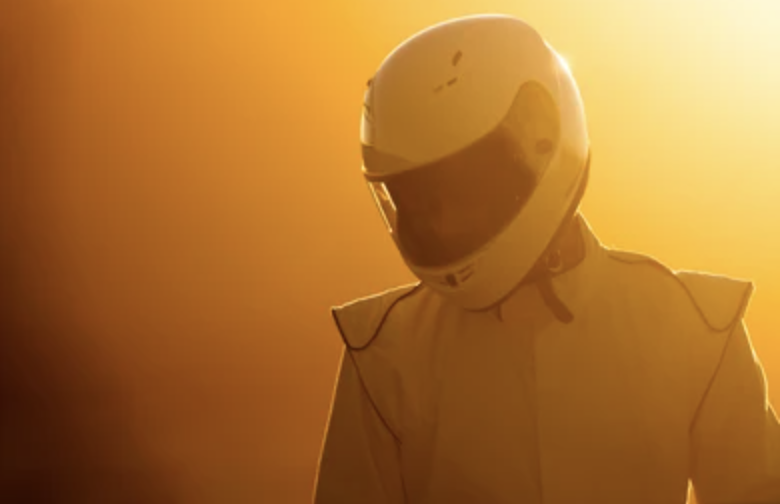
Formula One might be known for speed, skill, and spectacle—but it’s also full of human beings who, under those helmets, are doing their best to take care of themselves. Just like the rest of us.
And maybe that’s the real reason I and you became a fan
CNCbet333…three’s a crowd, or three’s a charm? Gonna find out. Their selection of table games is what drew me in. Blackjack, here I come! Give em a look at cncbet333
Fun97bet, eh? Sounds like a good time. If you’re looking for no-pressure place to have a little flutter this might be it. Give them a try: fun97bet
JLJL4, I’ve seen it pop up a few times. Seems to have a focus on mobile betting. Good if you are on the go a lot. Access at jljl4
https://shorturl.fm/i8Ycz